 TOM
TOMYour permission → the signature
Session limits onchain
RunningYour permission has a budget, an expiry and a list of allowed contracts, written to your smart account.
Read the chapterTechnology
TOM competes on what is hard to copy, not on the number of buttons. Each part below shows something that is usually hidden and says plainly whether it runs today.
The connections
Explore the parts behind a signature, a decision and a receipt.
Select a part to follow its connection.
Your permission → the signature
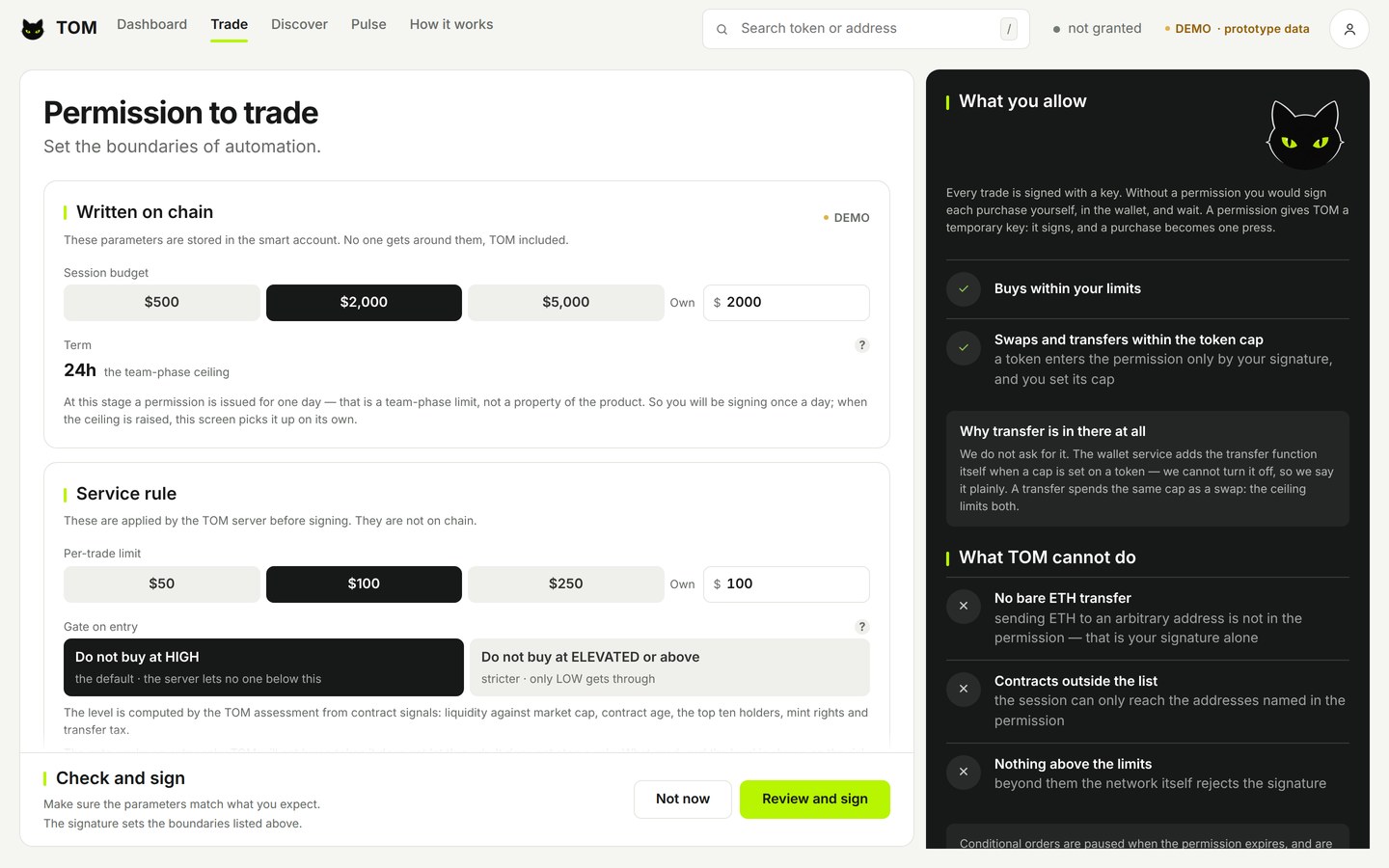
Your permission has a budget, an expiry and a list of allowed contracts, written to your smart account.
Read the chapterChecks before every signature
Checks run before every signature, in three classes: limits written to your smart account; rules checked by TOM’s server; and what stays your decision: the permission’s budget, its expiry and revoking it.
Read the chapterBefore signing
Before signing, TOM simulates the transaction to confirm it will not revert and to estimate its cost. Simulation does not predict the price: the quote sets the terms, and the minimum is what binds.
Read the chapterThe decision → the trade
Every trade is written to the ledger before it runs. No record, no trade.
The ledger only grows. Entries are hash-chained, so changing one breaks the chain, and that shows.
Read the chapterThe trade → the receipt
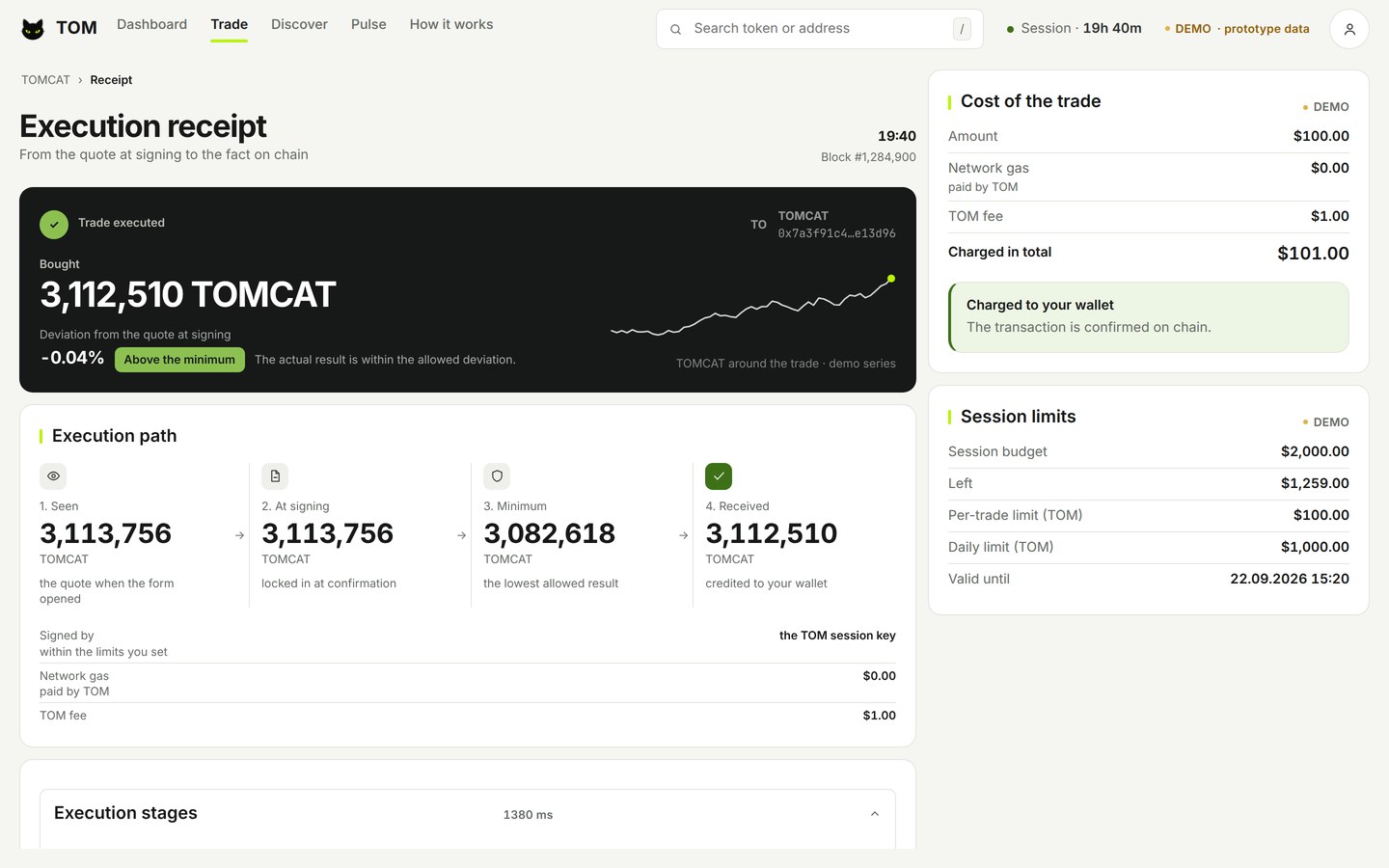
Every completed trade comes with a receipt: the quote at signing, the minimum written into the transaction, what actually arrived, and the difference between them.
The minimum is the only commitment in a trade. The network checks it; if the market moves past it, the transaction reverts instead.
Read the chapterConnections show the role of each part; the checks are not shown as a sequence.
Running means it works on mainnet in TOM’s closed team phase. Public access is not open yet.
Running means it works on mainnet in TOM’s closed team phase. Public access is not open yet.
The details
The mechanism, on the screens you use.
03 / In the interface
What is known about a contract, and what is not.
Look closer at the risk view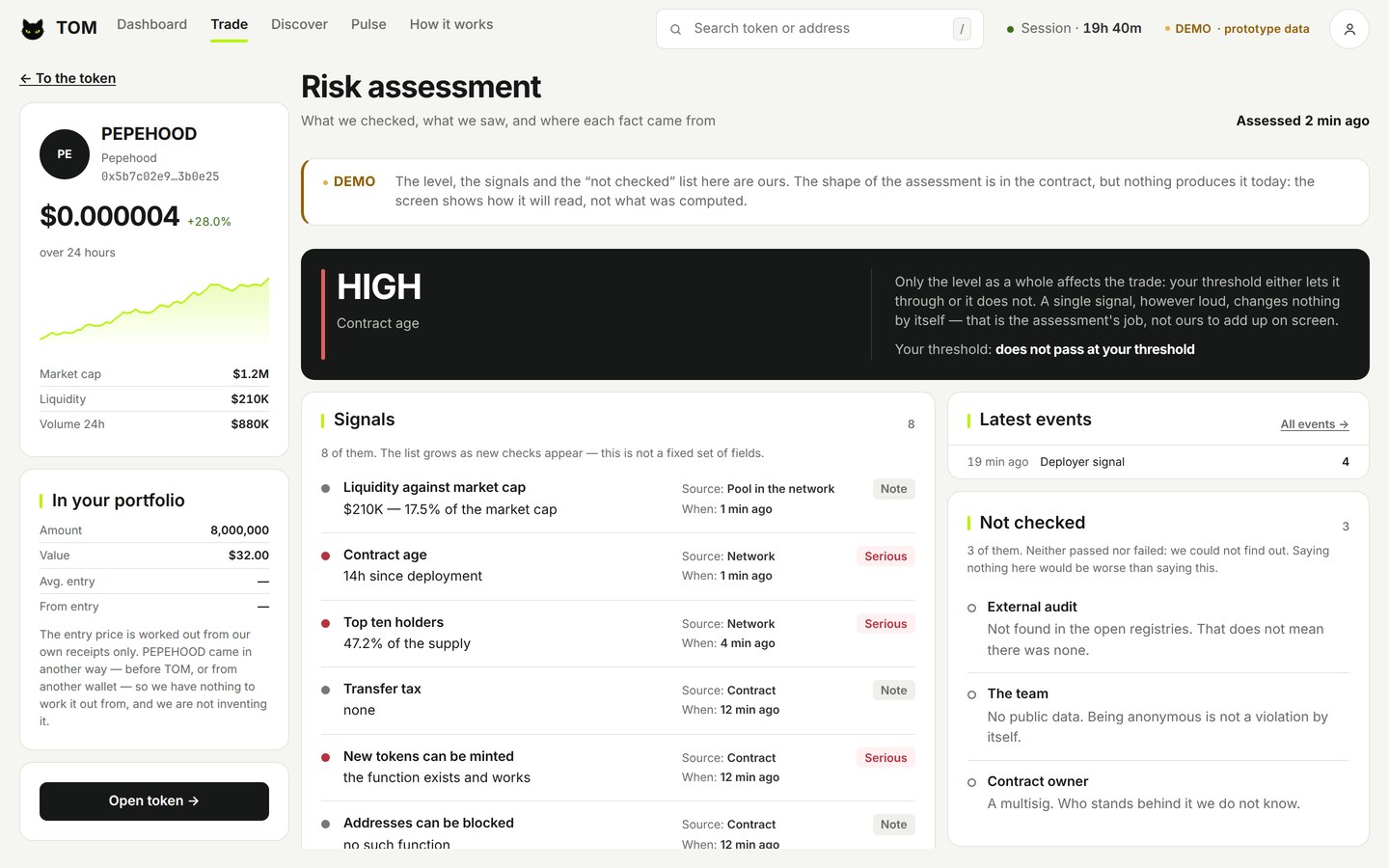
What a trade actually cost you.
Every completed trade comes with a receipt: the quote at signing, the minimum written into the transaction, what actually arrived, and the difference between them.
The minimum is the only commitment in a trade. The network checks it; if the market moves past it, the transaction reverts instead.
Next: Execution Proof — a reproducible report of execution quality, compared with the direct pool route.
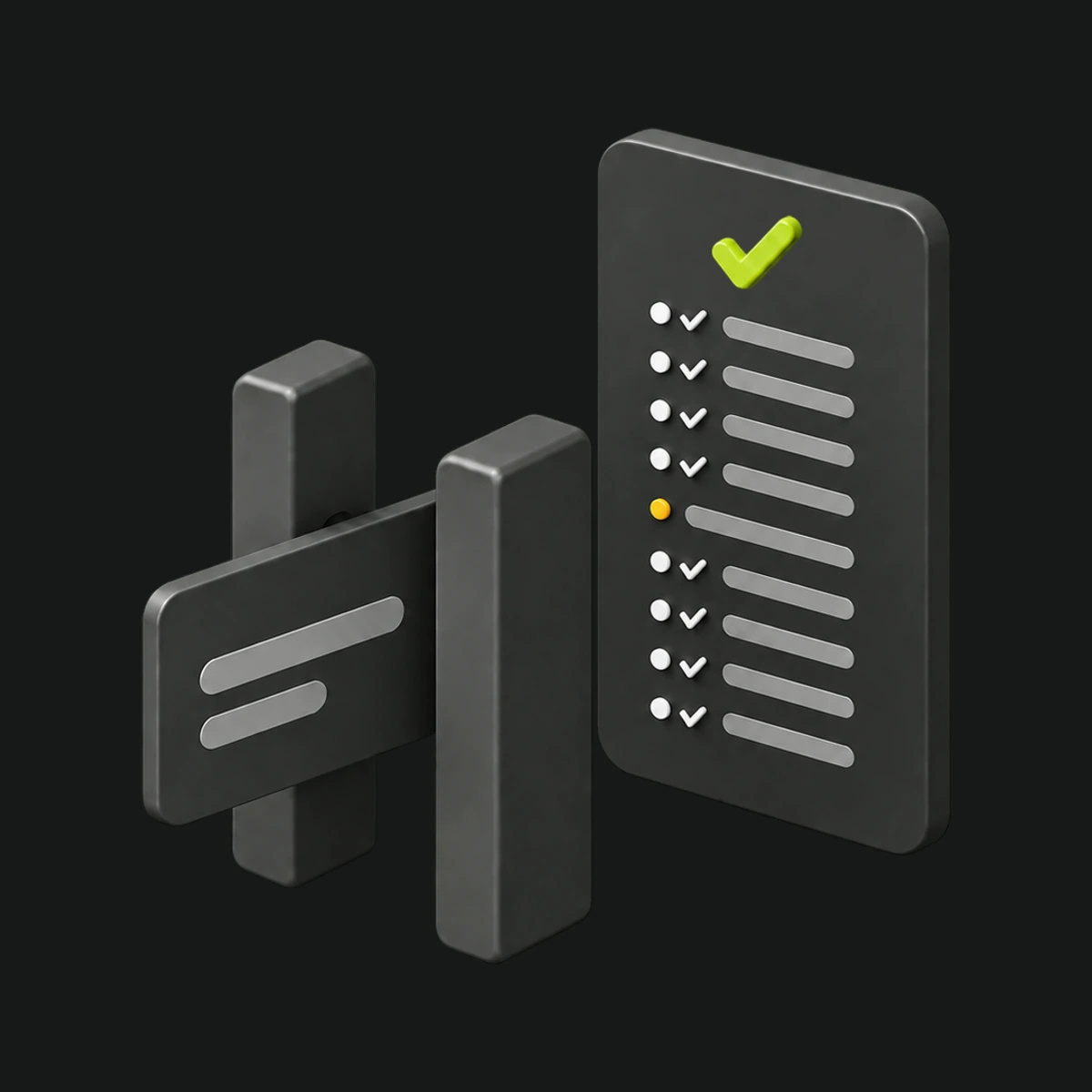
Why a trade was allowed or stopped.
Checks run before every signature, in three classes: limits written to your smart account; rules checked by TOM’s server; and what stays your decision: the permission’s budget, its expiry and revoking it.
A refusal always names its reason: your limit or a TOM rule.
Whether a transaction will go through, before you sign it.
Before signing, TOM simulates the transaction to confirm it will not revert and to estimate its cost. Simulation does not predict the price: the quote sets the terms, and the minimum is what binds.
What was decided and when, recorded before it happened.
Every trade is written to the ledger before it runs. No record, no trade.
The ledger only grows. Entries are hash-chained, so changing one breaks the chain, and that shows.
Exactly what TOM is allowed to do.
Your permission has a budget, an expiry and a list of allowed contracts, written to your smart account.
What is known about a contract, and what is not.
Signals about a contract and its deployer, each with a basis, a source and a time, plus a list of what was not checked. Built earlier; paused for now.
Network events before they reach the lists.
New pools, liquidity changes and deployer connections, as they happen onchain. Built earlier; paused for now.
Not in the product yet. Listed to show where TOM is going, without dates.
The buy, its targets and its stop-loss as one plan.
Send a token address, get a risk card with its sources.
Share a closed trade together with the receipt behind it.
Share the filters you use to find tokens.
TOM Guard’s pre-trade checks, available to other apps.
AI agents ask TOM Guard to check a transaction before they sign it. It only reads: it does not trade.
The first version runs for partners, with keys issued by TOM. There is no open registration.